Uraufführung 2009 in Augsburg
Die erste Variante entstand aus einer Projektwoche mit Auszubildenden der
Lechwerke Augsburg.
Verein: "MehrMusik" - Leitung und Organisation: Ute Legner
Künstler: Sebastian Giussani und Erwin Stache
Im Ergebnis einer Containerdurchsuchung in den Lechwerken, fanden wir
unzählige, noch funktionierende, Leuchtstoffröhren und anderes Material, mit
welchem ebenfalls interessante Objekte entstanden.
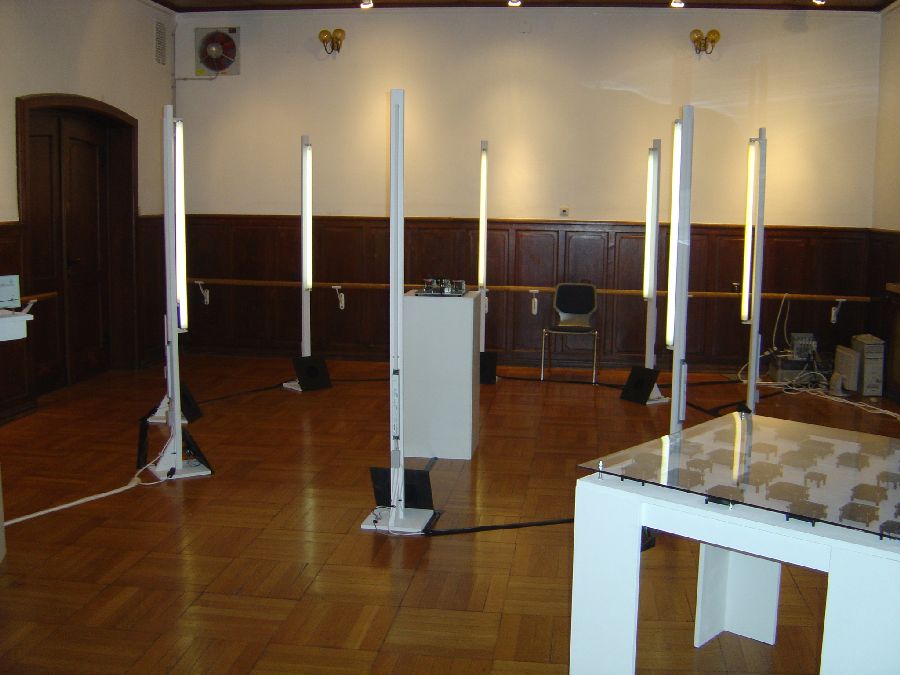
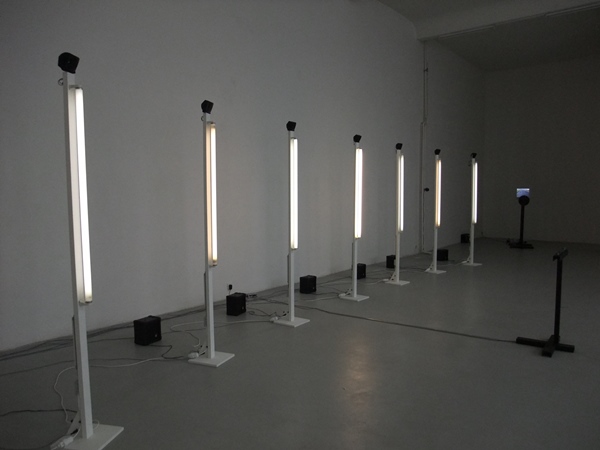
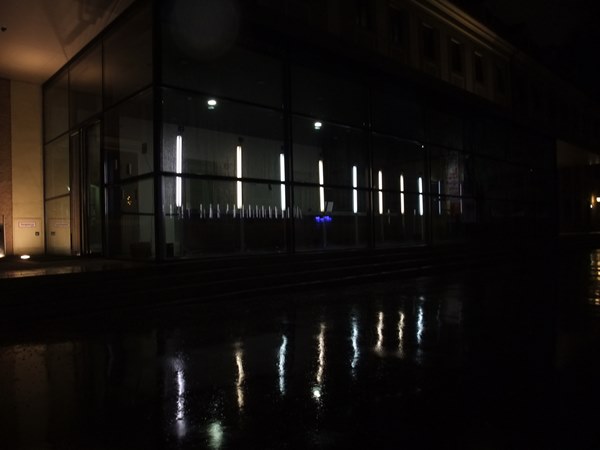
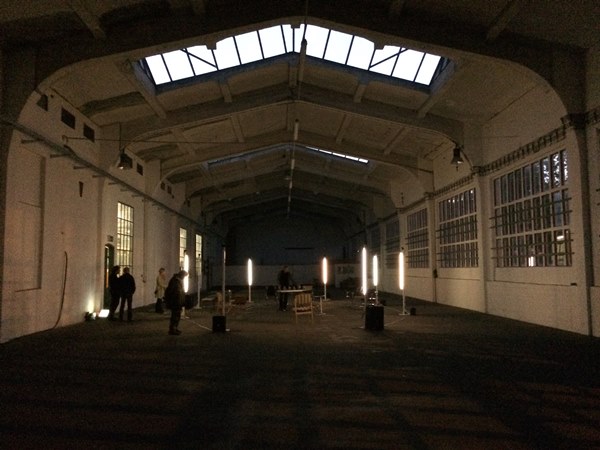
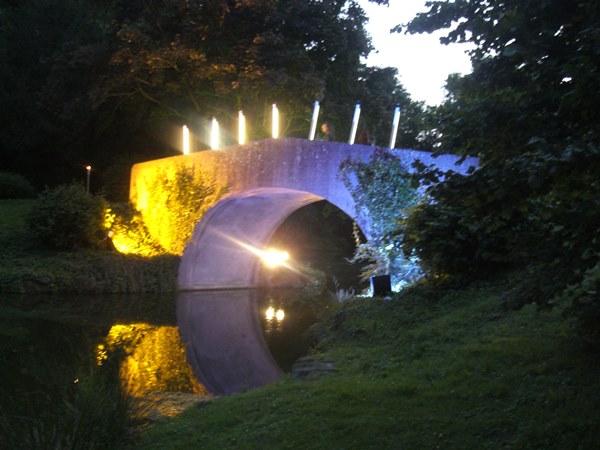
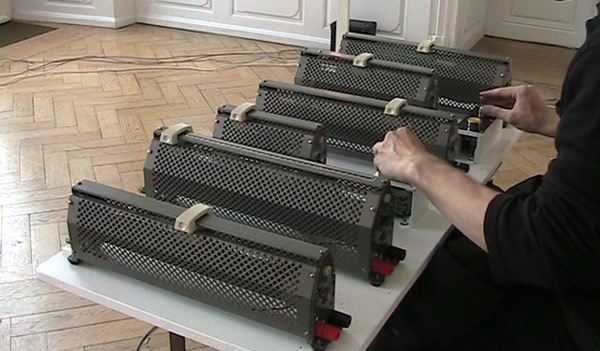
Die erste Installation wurde beim Festival Lab30 in Augsburg gezeigt. Die
Leuchtstoffröhren standen im Kreis in dessen Mitte ein Steuerpult aus
verschiedenen Schaltern und Reglern aufgebaut war. Sebastian Giussani
schrieb ein Sequenzer Programm, während die Lehrlinge und ich sich vor allem
um die Elektrik und den Aufbau der Installation kümmerten. Ansteuergeräte
zum Dimmen von Leuchtstoffröhren mussten angeschlossen werden. Eine
Leiterplatte für die Steuerung selbst wurde entwickelt, bestückt und
programmiert. Das Mikrocontrollerboard verband via Midi die Installation
mit einem Computer.
Das Publikum konnte nun mittels des Schaltpultes selbst den Sequenzer steuern.
Der Sequenzer arbeitete 8fach polyphon, hörbar aus acht Lautsprechern, die
sich oben an den Leuchtstoffröhren befanden. Der Klang ging sozusagen immer
um den Besucher herum.
Die weitere Entwicklung des Sequenzers führte zu einem Raspberry-Minicomputer.
Das Programm schrieb ich in PureData.
Dazu kamen noch klangliche Erweiterungen:
Zusätzliche Verarbeitung von Audiodateien, weitere Oszillatoren und
Mischsysteme, viele rhythmische Interventionen uvm..
Im Dampfmaschinenmuseum Hanau installierte ich ein ähnliches System.
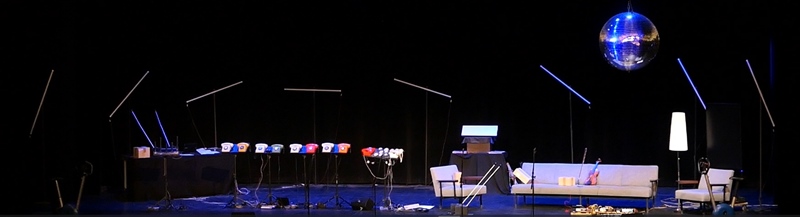
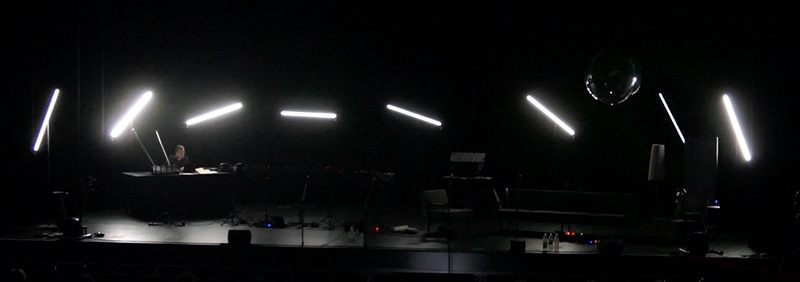
Es gibt das System als interaktive Installation für das Publikum
und als Bühnenbild und Instrument für die Gruppe Atonor.
Premiere in Augsburg in 2009
The initial version was created during a project week with apprentices from
Lechwerke Augsburg.
Association: "MehrMusik" – Direction and organization: Ute Legner
Artists: Sebastian Giussani and Erwin Stache
As a result of searching a dumpster at Lechwerke, we found countless
fluorescent tubes that were still functional, along with other materials
that were also used to create interesting objects.
The first installation was exhibited at the Lab30 festival in Augsburg. The
fluorescent tubes were arranged in a circle, with a control console made
up of various switches and knobs set up in the center. Sebastian Giussani
wrote a sequencer program, while the apprentices and I focused primarily
on the electrical wiring and the assembly of the installation. Control
units for dimming the fluorescent tubes had to be connected. A circuit
board for the control system itself was developed, populated, and
programmed. The microcontroller board connected the installation
to a computer via MIDI.
The audience could now control the sequencer themselves using the control panel.
The sequencer operated with eight-voice polyphony, with the sound emanating
from eight loudspeakers positioned at the top of the fluorescent tubes.
In a sense, the sound constantly surrounded the visitor.
Further development of the sequencer led to the use of a Raspberry Pi minicomputer.
I wrote the program in Pure Data.
Sonic enhancements were also added:
additional audio file processing, extra oscillators and
mixing systems, numerous rhythmic interventions, and much more.
I installed a similar system at the Hanau Steam Engine Museum.
The system exists as an interactive installation for the public
and as a stage set and instrument for the group Atonor.